


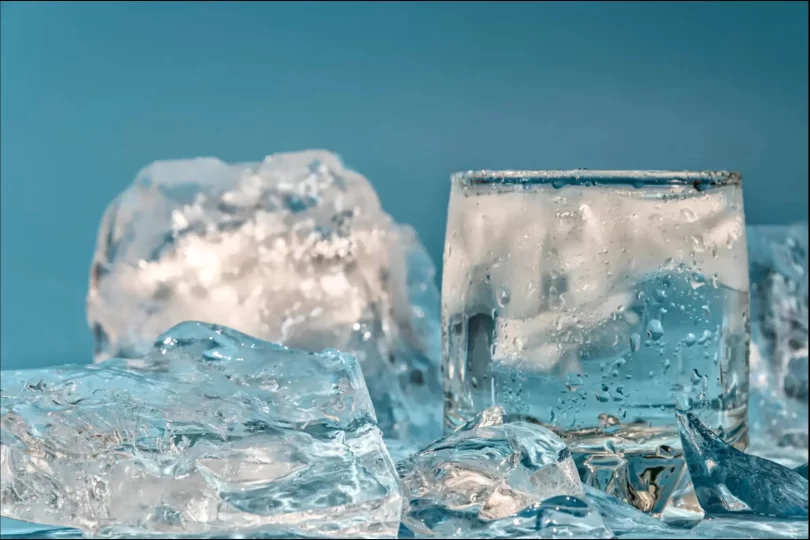
Quick answer: Water expands when it freezes because its molecules bond into an open, hexagonal crystal lattice that spaces them further apart than in liquid water. This makes ice about 9% less dense than water — which is why ice floats, why bottles crack in the freezer, and why pipes burst in a hard frost.
Have you ever wondered why ice cubes float in your drink, or why pipes burst in freezing weather? Most substances contract and take up less space when they freeze. Water does the opposite — it expands. This article explains why that happens, the science at the molecular level, and why this one unusual property matters so much for life on Earth.
The science: why water expands when it freezes
A water molecule is made of two hydrogen atoms and one oxygen atom (H₂O) in a V shape. Water molecules attract one another through hydrogen bonds — weak links between the hydrogen of one molecule and the oxygen of another.
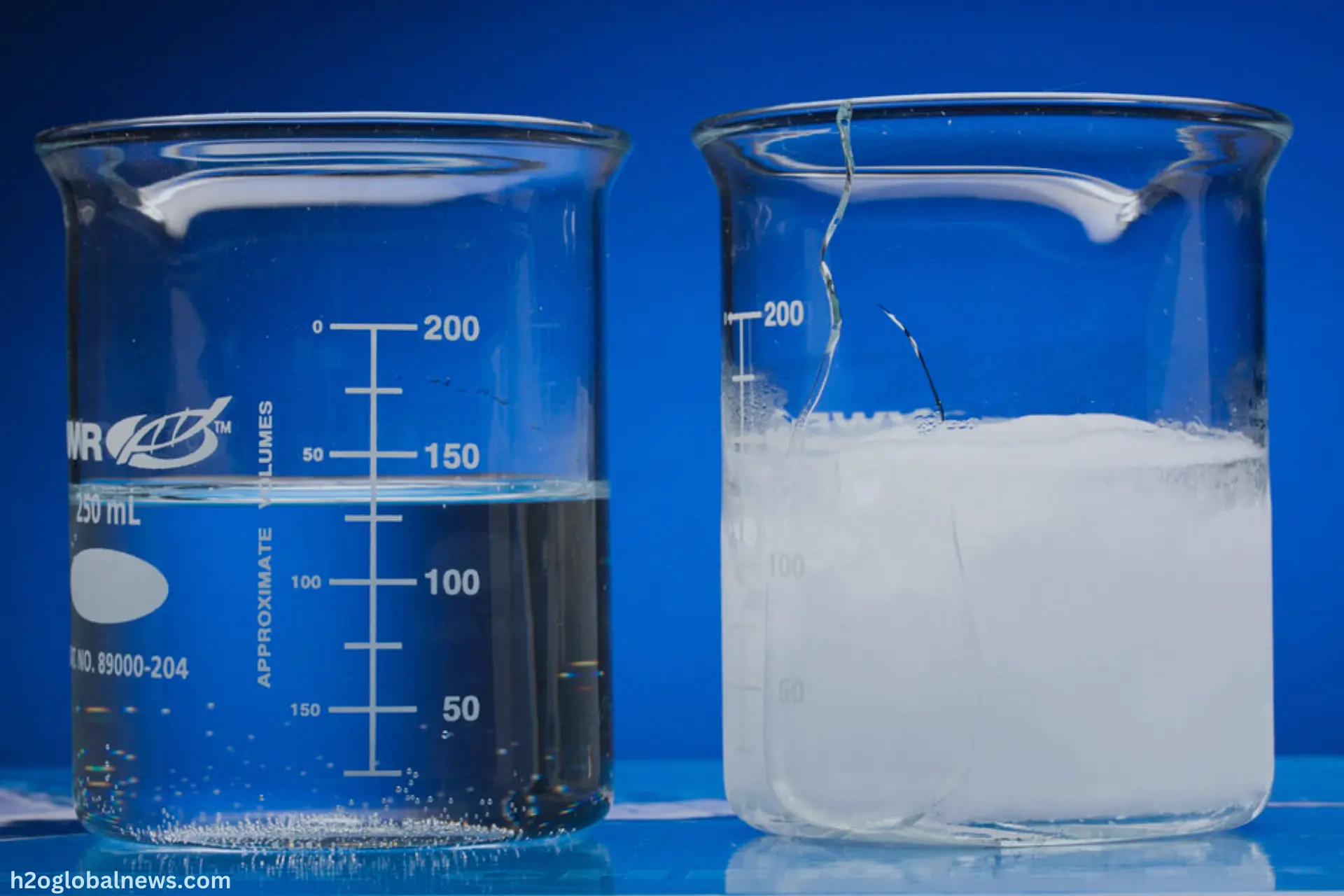
In liquid water, molecules slide past each other and pack fairly closely. As water cools toward freezing, those hydrogen bonds pull the molecules into a fixed, regular hexagonal lattice. The catch is that this lattice actually holds the molecules further apart than they sit in the liquid. The result: frozen water takes up more space than liquid water. Other properties, such as dissolved gases in water, can also affect how water behaves as it cools.
Water is densest at 4°C
Here is the part that surprises people: water reaches its maximum density at about 4°C, not at freezing point. As water cools from warm to 4°C it contracts and gets denser, as you would expect. But cool it further, from 4°C down to 0°C, and it begins to expand again as the crystal structure starts to form.
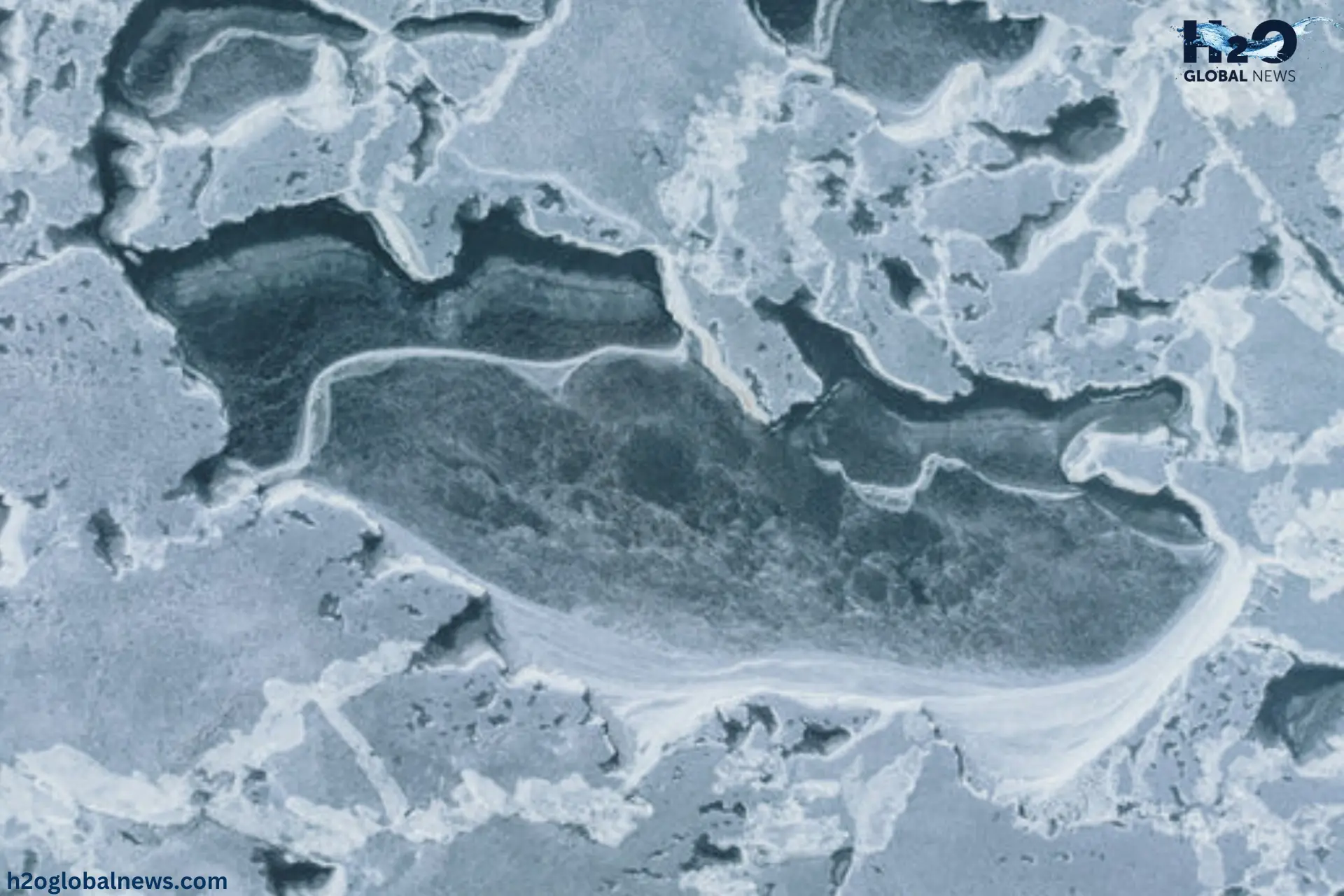
This quirk has a profound consequence. In a lake, the densest water (4°C) sinks to the bottom while the coldest water and the ice that forms stay at the top. That floating layer of ice then insulates the water beneath it, so lakes freeze from the top down rather than the bottom up. According to the U.S. Geological Survey, this is critical for life on Earth — it is why fish and other aquatic life can survive through winter instead of being frozen solid.
How much does water expand when it freezes?
Water doesn’t just expand a little — its volume increases by about 9% when it freezes. That may not sound like much, but the effects are large. Fill a bottle with water and leave it in the freezer and it can crack or burst as the ice pushes outward. The same pressure is what splits water pipes in cold weather.
Because ice is roughly 9% less dense than liquid water, it needs about 9% more space — which is exactly why icebergs and ice cubes float rather than sink.
Positive and negative effects of water expansion
Positive effects
- Protecting aquatic life. Because ice floats and insulates the water below, lakes and rivers don’t freeze solid, allowing fish and other organisms to survive the winter.
- The albedo effect. Ice and snow reflect a large share of incoming sunlight back into space, helping to regulate Earth’s climate.
- Frost weathering. When water seeps into cracks in rock and freezes, its expansion breaks the rock into smaller pieces — a natural process that helps create soil over time.
Negative effects
- Burst pipes. Water freezing inside a pipe expands and builds pressure until the pipe cracks or bursts, causing costly damage to homes and buildings.
- Damage to roads and structures. Water that seeps into concrete or asphalt and then freezes can crack and weaken roads, bridges and buildings — which is why engineers must account for freeze-thaw cycles in cold climates.
Key takeaways
- Water expands by about 9% when it freezes because its molecules form an open hexagonal crystal lattice.
- Ice is roughly 9% less dense than liquid water, which is why it floats.
- Water is at its densest at about 4°C, not at freezing point.
- This is why lakes freeze from the top down, insulating and protecting aquatic life through winter.
- The same expansion bursts pipes and cracks roads in cold weather.
Conclusion
Water is one of the very few substances that expands when it freezes, and that single property shapes the world in outsized ways. It lets ice float and lakes stay liveable through winter, it carves soil from solid rock, and it bursts the pipes we forget to lag. Behind all of it is a simple piece of molecular geometry: hydrogen bonds locking water into an open, spacious crystal.
Frequently asked questions
Because as water cools toward freezing, its molecules link through hydrogen bonds into an open, hexagonal crystal lattice that holds them further apart than in liquid water. This makes ice about 9% less dense than water, so it takes up more space.
Water expands by about 9% when it freezes, meaning ice takes up roughly 9% more volume than the same amount of liquid water. This is why a full bottle can crack in the freezer.
Ice floats because it is about 9% less dense than liquid water. The open lattice of frozen water is lighter for its volume, so ice rises to the surface instead of sinking.
Water is at its maximum density at about 4°C. Below that temperature it starts to expand again, which is why the coldest water and ice sit at the top of a lake.
Water expands when it freezes. Most substances contract as they solidify, but water is unusual: its molecules spread into an open crystal structure, increasing volume by about 9%.
Because water is densest at 4°C, the coldest water and the ice that forms stay at the surface. This floating ice layer insulates the water below, letting fish and other life survive the winter.
Sources
- U.S. Geological Survey, Water Science School, Water Density (maximum density at 4°C; ice ~9% less dense; why lakes don’t freeze bottom-up).