


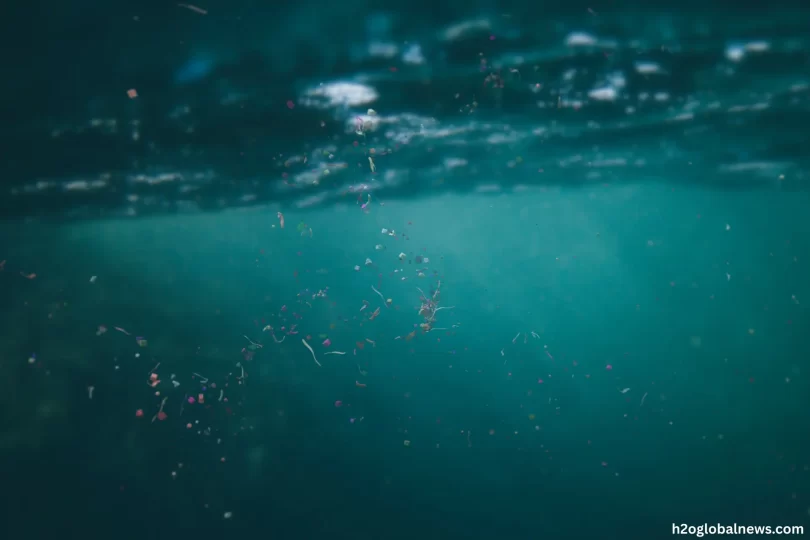
Microplastics in drinking water have moved from an emerging research concern to a mainstream operational challenge for water utilities, regulators, and engineers across the globe. Detected in tap water, bottled water, groundwater, and even treated effluent, these particles present technical, regulatory, and public health questions that the water sector is only beginning to answer with the rigour they demand. For professionals already managing complex contaminant challenges — from PFAS in drinking water to emerging micropollutants — microplastics represent a further layer of analytical and operational complexity.
What Are Microplastics in Drinking Water?
Microplastics are plastic particles smaller than 5 millimetres in their longest dimension, though the particles of greatest concern in drinking water are typically in the micrometre or nanometre range — far below the threshold visible to the naked eye. They are not a single substance but a broad category encompassing dozens of polymer types, including polyethylene terephthalate (PET), polypropylene, polystyrene, polyamide, and polyvinyl chloride. Their physical and chemical properties vary accordingly, as does their behaviour in water treatment systems.
A 2019 report by the World Health Organization (WHO) reviewed available research and found microplastics in 81% of tap water samples collected globally. Separately, research published in Environmental Science & Technology by scientists at the State University of New York found microplastic contamination in 93% of commercial bottled water brands tested across eleven brands in nine countries. These findings accelerated regulatory attention and prompted utilities to reassess their treatment processes. To place this in context: global plastic production reached approximately 400 million tonnes in 2022, according to Plastics Europe’s Plastics — the Facts 2023 report, and a significant fraction of this enters the environment as waste that ultimately fragments into microplastic particles.
Microplastics fall into two categories. Primary microplastics are manufactured at small size — including nurdles (raw plastic pellets), fibres shed from synthetic textiles, and particles used in industrial abrasives. Secondary microplastics result from the fragmentation of larger plastic items through UV exposure, mechanical wear, and biological degradation.
How Do Microplastics Enter Drinking Water Supplies?
Contamination pathways are numerous and, in many cases, difficult to isolate. Microplastics enter source water through atmospheric deposition, surface runoff, wastewater effluent discharge, and the leaching of plastic from ageing infrastructure. Research from the University of Amsterdam has demonstrated significant microplastic fallout from the atmosphere in urban environments — particles that ultimately reach open reservoirs and river abstractions.
Synthetic textile fibres represent one of the most pervasive contributors. A single domestic wash cycle can release up to 700,000 fibres, many of which pass through wastewater treatment works (WwTW) largely intact. Research by the Water Research Foundation found that conventional activated sludge treatment removes between 72% and 83% of microplastics from wastewater, but the remainder is discharged to receiving waters — including rivers used as drinking water abstractions. The challenge this presents for wastewater treatment innovation is significant, as even high-performing biological processes were not designed with microplastic removal in mind.
Plastic water distribution infrastructure itself is also a source. Research published in Water Research in 2022 found that polyvinyl chloride (PVC) and high-density polyethylene (HDPE) pipes can shed microplastic particles into distributed water, particularly where pipes are subject to pressure fluctuations, disinfection by-products, or biofilm development. This pathway is of particular relevance to utilities managing large or ageing distribution networks.
Why Microplastics in Drinking Water Matter to the Water Sector
The water sector’s concern is not solely driven by toxicological risk — though that is a material consideration — but also by the regulatory trajectory, treatment efficacy gaps, and reputational implications for utilities responsible for public water supply.
The WHO’s 2019 microplastics assessment concluded that current evidence does not confirm a human health risk at concentrations found in drinking water, but explicitly stated that the database was insufficient to draw firm conclusions. The organisation called for improved analytical methods, standardised monitoring protocols, and expanded epidemiological research. That position has not substantially changed, but the WHO has committed to reviewing the evidence base as research matures — and the water sector should anticipate tightening guidance as that review proceeds.
Beyond toxicology, microplastics function as vectors for other contaminants. Their high surface area-to-volume ratio enables the adsorption of persistent organic pollutants, heavy metals, and endocrine-disrupting compounds — a characteristic that may amplify risk even if the particles themselves are biologically inert. This interaction with co-contaminants, including PFAS compounds, is an area of active investigation at institutions including the Norwegian Institute for Water Research (NIVA) and the UK Centre for Ecology & Hydrology.
Current Challenges and Limitations
The most pressing operational challenge for utilities is the absence of standardised methods for detecting and quantifying microplastics in drinking water. Unlike established parameters such as turbidity or total organic carbon, there is no agreed international standard for microplastics analysis that has been widely adopted across laboratories. This makes it difficult to compare data across studies, validate treatment performance, or establish defensible baseline concentrations.
The International Organisation for Standardisation (ISO) published ISO 24187:2023, a framework for analysing microplastics in water, which represents meaningful progress — but adoption across water quality laboratories remains uneven. The Water Research Foundation and the European Commission’s Joint Research Centre have both published guidance on analytical approaches, yet method harmonisation at a utility level remains incomplete.
Particle size is a complicating factor. Conventional monitoring methods — including spectroscopy and microscopy — are effective for particles above 10 micrometres but perform less reliably for nanoplastics. Nanoparticles are understood to present a greater biological risk due to their ability to cross cellular membranes, yet they are precisely the particles most difficult to detect and enumerate with available instrumentation.
How Drinking Water Treatment Plants Remove Microplastics
Understanding the performance of existing treatment processes against microplastics is essential for utilities assessing their current risk profile and investment needs. Removal efficiency varies considerably by process, particle size, and polymer type. No single treatment step achieves complete removal, which underscores the importance of multi-barrier approaches.
Coagulation and flocculation are the first active barriers in most conventional treatment trains. Coagulants — typically aluminium sulphate or ferric chloride — destabilise suspended particles and promote aggregation. Research from Delft University of Technology has shown that optimised coagulant dosing can improve microplastic capture rates, particularly for fibres and irregularly shaped particles, though performance against sub-10 micrometre particles remains limited.
Sedimentation and rapid gravity filtration remove the flocculated material, including microplastic-laden floc. Studies have reported combined removal rates of 40–70% through conventional coagulation-flocculation-sedimentation-filtration sequences, with performance influenced by particle density, shape, and surface chemistry.
Granular activated carbon (GAC) provides an additional removal mechanism through both physical straining and surface adsorption. GAC is particularly effective at retaining fibrous microplastics and those with hydrophobic surface characteristics. It is widely deployed in advanced drinking water treatment across the UK, Netherlands, and Germany, and represents an accessible upgrade pathway for utilities already operating GAC contactors for taste, odour, and organic carbon control.
Ultrafiltration (UF) membranes, with pore sizes typically in the 0.01–0.1 micrometre range, provide a near-absolute barrier to particles above the pore threshold. UF is increasingly integrated into treatment trains in Germany, Scandinavia, and Singapore, and removes the vast majority of microplastic particles encountered in surface water treatment. It is less effective for nanoplastics, which may pass through UF membranes at low concentrations.
Nanofiltration (NF) and reverse osmosis (RO) achieve the highest levels of microplastic removal — including nanoplastics — due to their semi-permeable membrane structures. RO systems used in desalination and water reuse applications offer essentially complete rejection of microplastic particles. However, both NF and RO are energy-intensive and generate a concentrate waste stream that must be managed, limiting their application to advanced treatment scenarios and potable reuse schemes.
For utilities evaluating treatment upgrades, the evidence supports a risk-based, multi-barrier approach: optimising conventional processes where possible, integrating membrane filtration where source water microplastic loads are elevated, and prioritising distribution network integrity to minimise post-treatment contamination. Monitoring at multiple points within the treatment train — not solely at the final supply — is essential for accurately characterising removal performance and identifying process vulnerabilities.
Industry Applications and Real-World Examples
Several utilities have begun voluntary monitoring programmes in advance of regulatory requirements. Thames Water, which supplies approximately 10 million people across London and the Thames Valley, has conducted microplastic monitoring as part of its broader water quality research programme. Similarly, Scottish Water has engaged with research bodies to characterise microplastic concentrations in its source waters and distribution systems.
In the Netherlands, Vitens has worked with the KWR Water Research Institute on microplastics characterisation in abstracted groundwater. KWR’s research has been instrumental in advancing understanding of plastic transport through subsurface environments — a pathway previously considered negligible but now recognised as significant where aquifer recharge zones are adjacent to agricultural or urbanised land.
In Singapore, PUB (the national water agency) has incorporated microplastics monitoring into its advanced water quality surveillance framework. Singapore’s NEWater programme — which reclaims treated wastewater for indirect potable use via microfiltration, reverse osmosis, and UV disinfection — provides one of the most comprehensive multi-barrier treatment systems in the world, and PUB’s published research indicates that this treatment train achieves effective microplastic removal. The programme illustrates how water resource recovery and potable reuse schemes must now account for microplastic removal as a design parameter.
In California, state-level action has provided a model for regulatory-led utility engagement. California’s State Water Resources Control Board published a microplastics policy framework in 2022, setting out monitoring requirements for drinking water suppliers — a development covered in detail in H2O Global News’ analysis of California’s microplastics monitoring efforts. This represents the most advanced utility-level regulatory framework globally for microplastics in drinking water, and may influence future approaches in other jurisdictions.
Veolia and SUEZ (now part of Veolia) have published case study data on microplastic removal performance in their membrane treatment installations across European systems, with UF-based plants consistently demonstrating removal rates above 90% for particles greater than the membrane pore threshold.
Regulatory and Policy Developments
Regulatory frameworks for microplastics in drinking water are still developing, but the direction of travel is clear. The European Union’s revised Drinking Water Directive (EU) 2020/2184, which came into force in January 2021, introduced a watch list mechanism for emerging contaminants — and microplastics were among the first parameters added for monitoring purposes. The European Commission is expected to consider binding parametric values for microplastics as monitoring data accumulates under this watch list framework.
In the United States, the Environmental Protection Agency (EPA) has included microplastics in its Contaminant Candidate List 5 (CCL5), published in November 2022 — a formal recognition that the evidence base warrants further evaluation for potential regulatory action under the Safe Drinking Water Act. The EPA has not set a maximum contaminant level (MCL) for microplastics, but its inclusion in CCL5 signals a clear regulatory pathway.
The UK’s Drinking Water Inspectorate (DWI) has engaged with research programmes on microplastics but has not yet introduced statutory monitoring requirements. The DWI’s Chief Inspector reports have referenced microplastics as an area of surveillance interest, and the Water Industry National Environment Programme (WINEP) is expected to address microplastics monitoring within future asset management periods.
Australia’s National Health and Medical Research Council (NHMRC) similarly assessed microplastics in its 2022 update to the Australian Drinking Water Guidelines, concluding that the evidence did not yet support a health-based guideline value but recommending that jurisdictions monitor concentrations as a precautionary measure. The UK’s Chemical Monitoring Wastewater Programme has also begun capturing data on micropollutant concentrations in treated effluent, providing a baseline against which future microplastics regulatory requirements can be assessed.
Future Trends and Innovations
Research investment in microplastics detection and removal is accelerating. Horizon Europe funding has supported multiple multi-institution projects, including the PLASTICE and MINAGRIS programmes, which are developing improved analytical tools and investigating microplastic transport through agricultural and urban water cycles.
Advanced oxidation processes (AOPs) — including ozonation combined with hydrogen peroxide and UV/chlorine systems — are being investigated for their ability to degrade polymer structures rather than simply remove intact particles. Early-stage research from ETH Zurich suggests that certain AOP combinations can partially degrade polyethylene and polystyrene under controlled conditions, though translating this to full-scale treatment remains a significant technical challenge. The UK has seen early deployment of ozone-based micropollutant removal at several WwTWs — a technology pathway that may offer co-benefits for microplastic management.
Digital monitoring is also emerging as a tool for continuous microplastics surveillance. Flow cytometry adapted for plastic particle analysis, in-line spectroscopic sensors, and machine learning-assisted image analysis are all at various stages of development. Utilities with advanced operational monitoring infrastructure — including several large European water companies — are participating in trials of sensor-based approaches that could enable real-time microplastic detection without laboratory-based sample processing.
At the source control level, the UK’s ban on plastic microbeads in rinse-off cosmetics (introduced in 2018 under the Environmental Protection (Microbeads) (England) Regulations) and equivalent EU restrictions represent meaningful upstream reduction — though fibres from synthetic textiles, tyre wear particles, and agricultural plastic remain largely unregulated and continue to represent the dominant loading to water environments.
Conclusion
Microplastics in drinking water represent a technically complex and rapidly evolving challenge for the water sector. The science is advancing, but utilities are being asked to act — through monitoring, treatment optimisation, and stakeholder communication — before regulatory frameworks have fully crystallised. Those utilities that invest now in characterising their microplastic exposure, engaging with national monitoring programmes, and evaluating the performance of existing treatment barriers will be better positioned when binding standards inevitably arrive. The question is no longer whether microplastics require attention from water professionals — it is how comprehensively and how quickly that attention must be applied.
Frequently Asked Questions: Microplastics in Drinking Water
What are microplastics in drinking water?
Microplastics are plastic particles smaller than 5 millimetres found in treated drinking water, tap water, and bottled water. They originate from multiple sources including fragmented plastic waste, synthetic textile fibres, tyre wear, and plastic water infrastructure. They have been detected in drinking water supplies across all continents.
Are microplastics in drinking water dangerous?
Based on current evidence, the WHO has concluded that microplastics in drinking water do not represent a confirmed human health risk at concentrations typically encountered. However, the evidence base is acknowledged to be incomplete, particularly regarding nanoplastics and the long-term effects of chronic low-level exposure. The water sector is treating this as a precautionary priority rather than a confirmed hazard.
How are microplastics removed during drinking water treatment?
Conventional treatment processes — including coagulation, flocculation, sedimentation, and sand filtration — remove a significant proportion of microplastics, with combined removal rates typically in the range of 40–70% under standard operating conditions. Ultrafiltration membranes achieve removal rates above 90% for particles above the pore size threshold, particularly for smaller particles. Granular activated carbon also contributes to microplastic retention. Reverse osmosis provides near-complete removal but is generally reserved for advanced water treatment and potable reuse applications. No single treatment process achieves complete removal across all particle sizes and polymer types.
What regulations apply to microplastics in drinking water?
No jurisdiction has yet established a binding maximum contaminant level for microplastics in drinking water. The EU’s revised Drinking Water Directive includes microplastics on its watch list for monitoring. The US EPA has listed microplastics on its Contaminant Candidate List 5. California’s State Water Resources Control Board has published a monitoring policy framework. The UK’s DWI is monitoring developments but has not introduced statutory limits. Regulatory frameworks are expected to evolve as monitoring data accumulates.
How do microplastics get into tap water?
Microplastics enter water sources through atmospheric deposition, surface runoff, wastewater effluent discharge, and leaching from plastic distribution infrastructure. Treated wastewater from domestic and industrial sources is a significant pathway, as conventional wastewater treatment does not eliminate microplastics entirely. Ageing plastic pipework within distribution networks can also shed particles directly into supplied water.
What are utilities doing about microplastics?
Progressive utilities including Thames Water, Scottish Water, Vitens, and PUB Singapore have begun voluntary monitoring programmes to characterise microplastic concentrations in their source waters and distribution systems. Some utilities are evaluating treatment enhancements — including optimised coagulation and membrane filtration — to improve microplastic removal. Industry bodies including the Water Research Foundation and KWR Water Research Institute are supporting utilities with guidance and research collaboration.
What is the difference between microplastics and nanoplastics?
Nanoplastics are a subset of microplastics with dimensions below 1 micrometre (some definitions use 100 nanometres as the upper boundary). Nanoplastics are of particular concern because their small size enables them to penetrate biological membranes more readily than larger microplastic particles. They are also more difficult to detect and quantify using currently available analytical methods, making their risk assessment more uncertain.
Will there be new regulations on microplastics in drinking water?
Regulatory tightening is widely anticipated. The EU is expected to consider parametric values for microplastics under the Drinking Water Directive as watch list monitoring data matures. The EPA’s Contaminant Candidate List process provides a formal pathway toward MCL-setting in the United States. The WHO is reviewing its 2019 assessment as new research emerges. Utilities should treat the current monitoring period as preparatory for future compliance requirements.


