


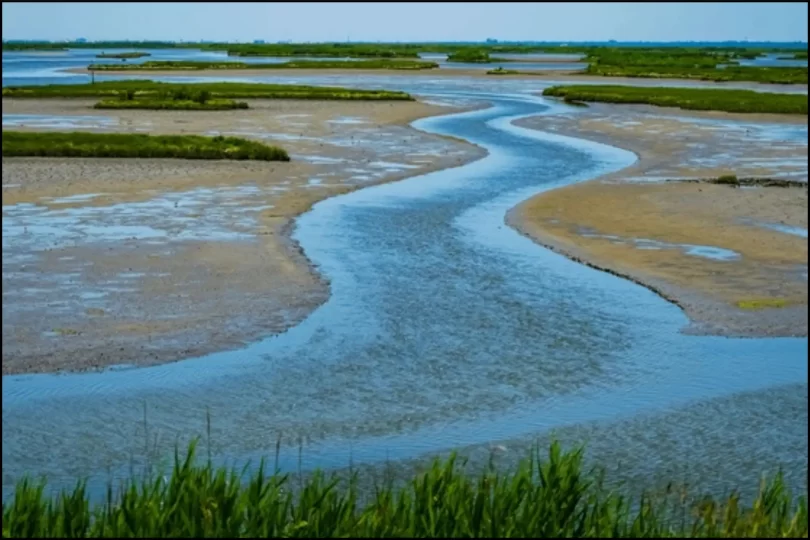
Quick answer: Brackish water is water with more salt than freshwater but less than seawater — a salinity of roughly 0.5 to 30 parts per thousand (ppt), compared with under 0.5 ppt for freshwater and about 35 ppt for seawater. It forms where fresh and salt water mix, such as estuaries, mangrove swamps and coastal lagoons, and can be treated into drinking water by desalination.
Brackish water sits in the middle ground between freshwater and the sea, and that in-between quality makes it both a challenge and a resource. It turns up in estuaries and mangroves, in coastal aquifers, and increasingly in the desalination plants that turn it into drinking water. This article explains what brackish water is, where it comes from, why it matters, and how it is treated for practical use.
What is brackish water?
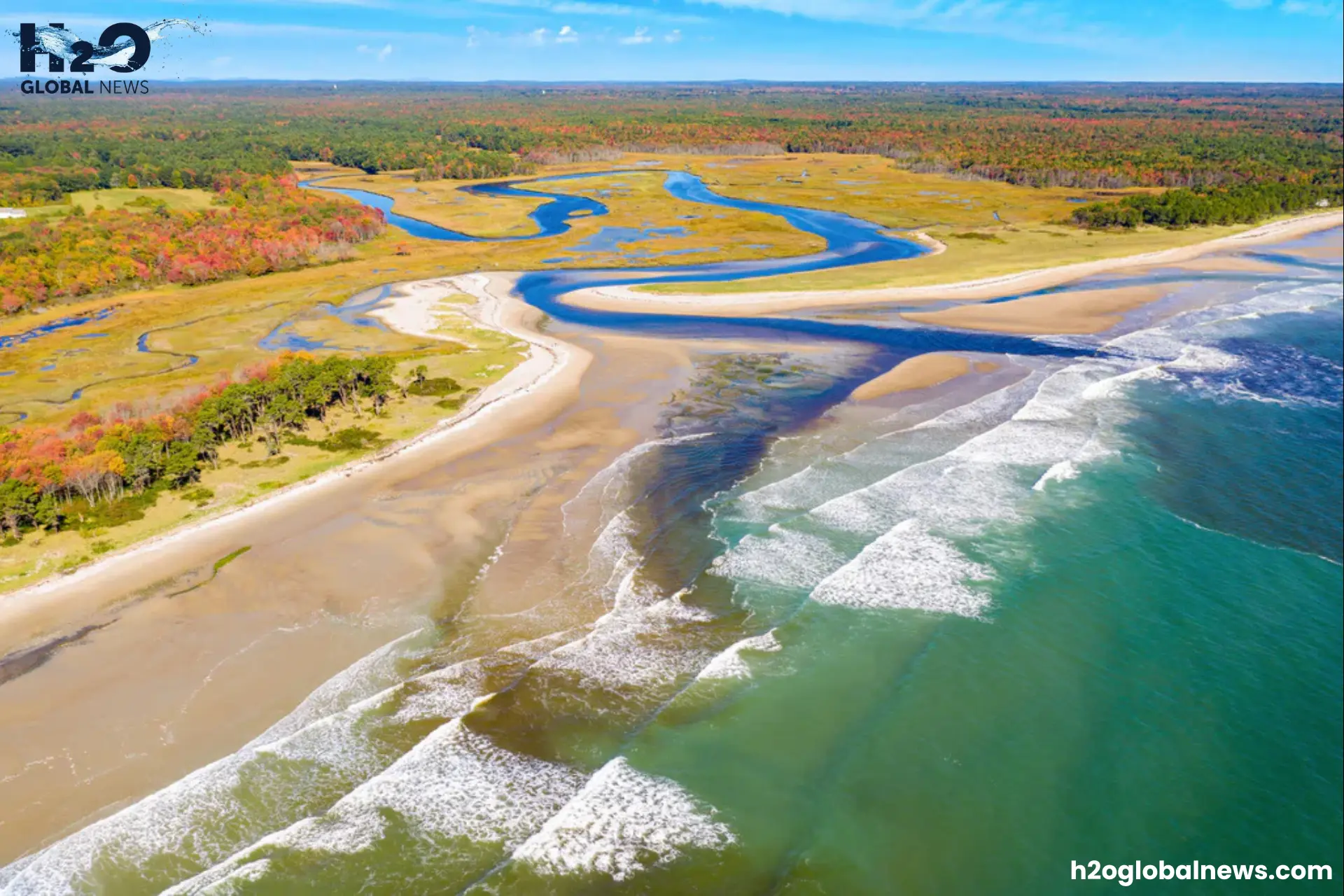
Brackish water is water with a salt concentration higher than freshwater but lower than seawater. Its salinity typically ranges from 0.5 to 30 parts per thousand (ppt), with the exact figure depending on location and conditions. For comparison:
- Freshwater: under 0.5 ppt
- Brackish water: 0.5 to 30 ppt
- Seawater: around 35 ppt
It is most common in transitional zones where fresh and salt water meet — estuaries where rivers reach the sea, mangrove swamps, and coastal lagoons. These brackish environments support a distinctive range of plants and animals adapted to the shifting salinity.
Where is brackish water found?
Brackish water occurs both naturally and through human activity: in estuaries and coastal lagoons, in mangrove wetlands, where saline groundwater seeps into freshwater aquifers, and in artificial settings such as some reservoirs and canals near the coast.
Why is water brackish?
Water becomes brackish wherever freshwater and saltwater mix, or where salt is introduced into fresh water. The main causes are tidal mixing in estuaries, the natural seepage of saline groundwater into freshwater systems, and evaporation that concentrates dissolved salts.
Importance of brackish water

- Environmental role. Brackish habitats such as estuaries are among the most productive ecosystems on Earth. They act as breeding grounds for fish and shellfish, feeding grounds for birds, and natural buffers that protect coastlines from erosion.
- Human use. Brackish water supports aquaculture (shrimp and other species farmed in brackish ponds), provides irrigation in areas where freshwater is scarce (after treatment), and — with proper treatment — can be converted into potable water.
How is brackish water treated?
Brackish water must have its excess salt and other contaminants removed before it can be used for drinking, agriculture or industry. The main methods are:
- Reverse osmosis — forces water through a semi-permeable membrane that blocks salt. Effective and widely used, though it requires energy and produces a concentrated brine.
- Electrodialysis — uses an electric field to pull dissolved salts through membranes. Well suited to lower-salinity brackish water.
- Ion exchange — swaps unwanted ions for harmless ones; useful for specific contaminants but less practical at high salt loads.
- Desalination plants — process large volumes using reverse osmosis or thermal distillation, and are especially valuable in arid regions with little freshwater.
Ecological importance of brackish water
Brackish environments are biologically rich and do quiet but vital work: fish and shellfish such as shrimp and crabs breed there, birds nest and feed in the wetlands, and mangroves and salt-tolerant plants stabilise coastlines. As natural buffers, these ecosystems also protect inland areas from storm surges and flooding.
Key takeaways
- Brackish water has a salinity of 0.5–30 ppt, between freshwater (under 0.5) and seawater (around 35).
- It forms where fresh and salt water mix — estuaries, mangroves, coastal lagoons — and where saline groundwater seeps into aquifers.
- It supports some of the planet’s most productive ecosystems and buffers coasts from erosion and storms.
- It is used in aquaculture and irrigation, and treated into drinking water mainly by reverse osmosis and desalination.
- Brackish water is a growing freshwater resource in arid, water-scarce regions.
Conclusion
Brackish water is defined by its in-between salinity, and that is exactly what makes it valuable. It sustains estuaries and mangroves, protects coastlines, and — thanks to treatment technologies like reverse osmosis — offers a growing source of fresh water for regions that need it most. Understanding it is the first step to using and protecting it well.
Frequently asked questions
Brackish water is water with more salt than freshwater but less than seawater, with a salinity of roughly 0.5 to 30 parts per thousand. It forms where fresh and salt water mix, such as estuaries and mangrove swamps.
Brackish water has a salinity of about 0.5 to 30 parts per thousand (ppt) — above freshwater (under 0.5 ppt) and below seawater (around 35 ppt).
Neither exactly — it is a mixture of the two. Brackish water is saltier than fresh water but far less salty than seawater.
In estuaries where rivers meet the sea, in mangrove swamps and coastal lagoons, and where saline groundwater seeps into freshwater aquifers.
Not without treatment. Brackish water is too salty to drink safely, but it can be converted into potable water through desalination, usually by reverse osmosis.
Mainly by reverse osmosis, electrodialysis, ion exchange and desalination plants, which remove excess salt and contaminants so the water can be used for drinking, agriculture or industry.
Sources
- NOAA National Ocean Service, Estuaries: What is an estuary?
- Standard oceanographic references — salinity bands: freshwater under 0.5 ppt, brackish 0.5–30 ppt, seawater around 35 ppt.