


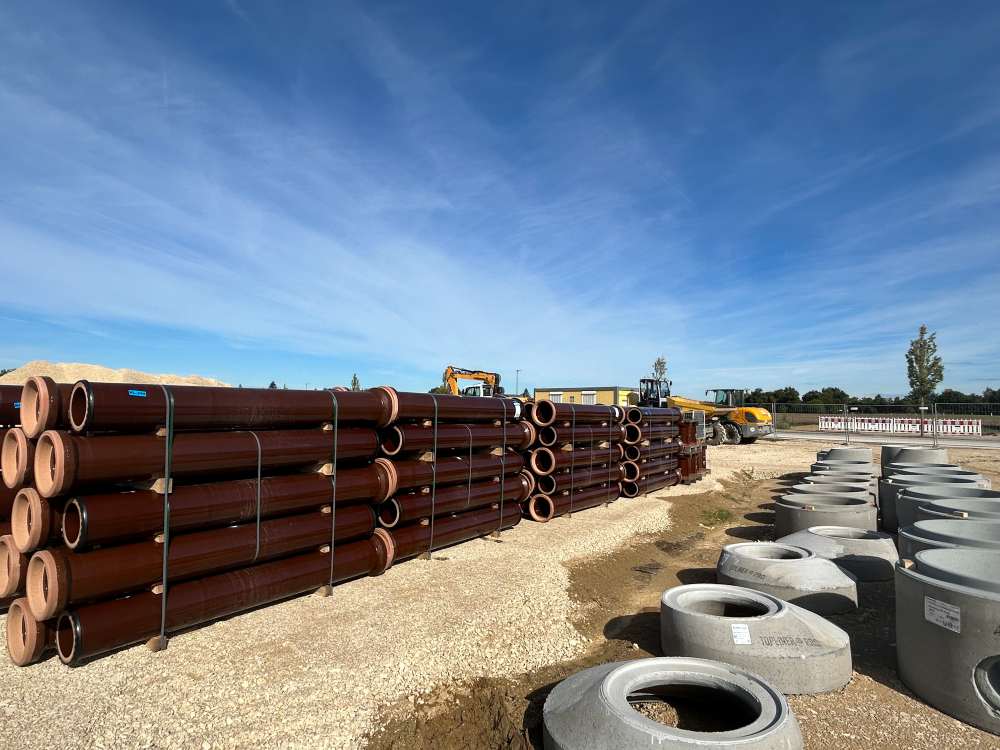
Tom Deckers, Managing Director at Steinzeug-Keramo, discusses how vitrified clay pipes deliver long-term performance and sustainability for modern drainage and wastewater systems.
Independent Life Cycle Assessment (LCA) studies show that vitrified clay pipes outperform alternative materials across the full life cycle of a system — which can exceed 100 years. Their durability, low maintenance requirements and recyclability make them one of the most sustainable and cost-effective choices for wastewater infrastructure.
Life cycle assessment: a full-system perspective
Growing emphasis on Life Cycle Costing (LCC) is transforming how utilities and engineers evaluate materials. This approach assesses total costs over the operational lifespan of a system rather than just initial installation costs. A recent Project Hub 360 study compared the full life cycle of vitrified clay and thermoplastic drainage pipes over a 150-year period.
Using data from a completed project in Italy, the analysis found that while initial investment for vitrified clay was around 4% higher than polypropylene (€3.32 million versus €3.19 million), long-term savings from reduced maintenance and replacement costs made clay the superior long-term investment.
Natural strength and sustainability
Vitrified clay pipes are produced from natural materials — clay, chamotte and water — and fired at high temperatures to achieve vitrification. This process gives the pipe exceptional strength, density and corrosion resistance without chemical additives or coatings.
The material’s compressive strength allows it to withstand static and dynamic loads, making it suitable for both shallow and deep sewer systems, even in difficult ground conditions. Its resistance to hydrogen sulphide corrosion also ensures stability in aggressive wastewater environments where other materials may degrade over time.
Each Steinzeug-Keramo pipe contains at least 30% recycled content, and vitrified clay products are 100% recyclable. They can be reintroduced into production or reused in new installations, supporting circular economy principles and reducing waste.
Longevity and reliability
With a proven operational lifespan of more than 150 years, vitrified clay systems can outlast the infrastructure built around them. Their chemical resistance and impervious structure prevent deterioration and reduce the need for ongoing maintenance. In operation, the smooth internal surface minimises sediment build-up, supporting consistent flow and lower maintenance costs.
When maintenance is required, individual sections can be repaired or replaced without disrupting the entire network — further extending the system’s life and reducing cost of ownership.
Cost of ownership and future investment
While vitrified clay pipes can cost around 4% more at installation, their long-term savings are significant. The independent LCC study found potential cost reductions of up to 65% over their lifespan compared with alternative materials. For civil and utility projects with operational lives exceeding 40 years, vitrified clay represents the most economical investment.
Steinzeug-Keramo’s KERA vitrified clay pipes, suitable for open trench, pipe jacking and sewer renovation, are available in diameters from 100mm to 800mm, with new tooling for DN150mm and DN225mm pipes. These include EPDM couplers compatible with standard profiles, expanding access for both new and replacement projects.
“Vitrified clay pipes provide a sustainable, reliable and long-lasting solution that aligns with the global drive towards resilient infrastructure,” said Tom Deckers. “Their combination of natural materials, longevity and recyclability delivers real long-term value for the drainage sector.”


