

SES Water has relaunched the SES Water Catchment Fund, which supports local farmers and landowners to improve soil health, protect groundwater and surface water, and build farm resilience. The aim is to improve local water quality.
The water company said pollution from agricultural pesticides and fertilisers can be a significant challenge for water companies. It said preventing that pollution at source offers a more sustainable and cost-effective approach to tackling water quality issues, and that the initiative would also benefit farmers, the environment and the local community.
How the SES Water Catchment Fund works
The fund is available in priority catchments that help protect water quality at source. Farmers and landowners can check whether they are eligible on the company’s Catchment Fund page.
Dr Ria Woodfield, Catchment Manager at SES Water, said: “Protecting our water starts in the catchment. Through our Catchment Fund, we’re working alongside local farmers and landowners to support practical solutions and training that aim to protect water quality at source, while delivering wider benefits for nature, farming and our local communities.”
Aeration roller tackles historic soil compaction
Last year SES Water funded a bladed aerator, or spiked roller, for a local farm to address historic soil compaction and improve long-term soil health. The funding also covered a subscription to a soil tracking app and soil health testing to monitor improvements over time.
Improving resilience to increasingly dry summers was one of the farm’s key aims. After an exceptionally dry summer, SES Water said the fund was proving a valuable opportunity for it to continue supporting drought-resistant projects.
Reducing nitrate leaching into groundwater
According to the company, relieving compaction encourages deeper root growth. This creates healthier soil that can store more water during dry periods and lets more water soak in during heavy rainfall.
SES Water said healthier soils and deeper roots can help crops take up nitrogen more effectively, leaving less nitrate in the soil to leach into groundwater. Better infiltration can also reduce surface runoff, so more rainfall enters the soil rather than flowing across the land.
The farmer has reported seeing roots growing into the fractures created by the roller, which the company said suggests improved rooting depth and soil structure. There has also been an unexpected practical benefit: electric fence posts are now much easier to push into previously compacted ground.
The farmer who received the grant said: “I knew I needed to do something about the compaction on our farm. Many companies will sell you things that claim will do this and hopefully the proof of this machine will show its worth. This grant gave me the opportunity to give this machine a fair trial without over stretching the farm’s finances.”
River Eden condition assessment
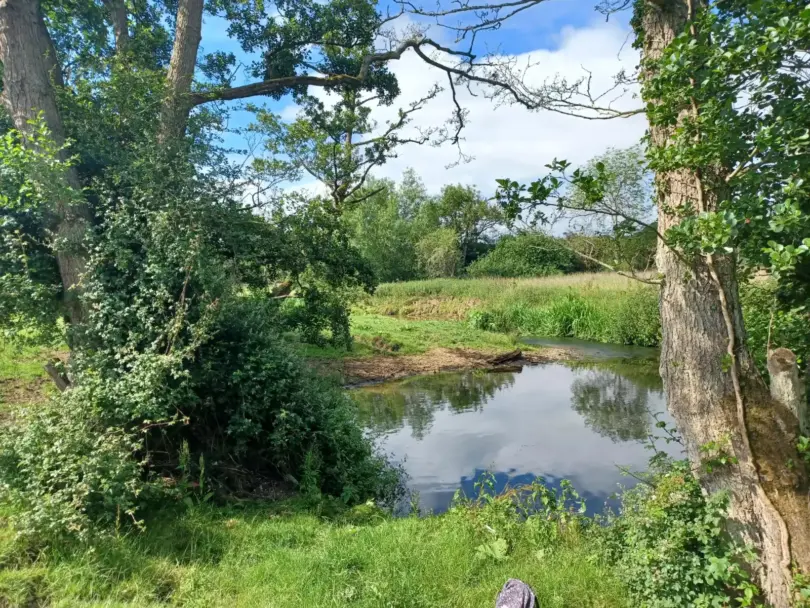
SES Water also funded a River Condition Assessment last year on a 2.2 km stretch of the River Eden between two neighbouring farms. The work was delivered by Surrey Wildlife Trust, which assessed the river’s current condition and identified practical opportunities to improve water quality and enhance biodiversity.
The assessment highlighted ways to reduce nutrient, sediment and pesticide run-off reaching the river. These included wider riverside buffer strips, tree planting, invasive species management and the creation of wetland features such as ponds.
According to SES Water, these measures can help intercept pollutants before they reach the river, reduce bank erosion and increase natural water storage. They can also improve resilience to both drought and heavy rainfall. The assessment also explored whether Biodiversity Net Gain funding could deliver and maintain the restoration measures over the long term.
The farmer involved in the project said: “The direct funding made a significant impact on our ability to progress with the River Condition Assessment in a timely fashion and in the meantime has given rise to more ambitious internal evaluations about what additional measures we can introduce to improve adjacent watercourses going forward.”
H2O Global News has previously reported on efforts to improve river water quality elsewhere in England, including an £8.9m wastewater upgrade in South Yorkshire.
Frequently asked questions
What is the SES Water Catchment Fund?
It is a fund from SES Water that supports local farmers and landowners to improve soil health, protect groundwater and surface water, and build farm resilience. The aim is to improve local water quality by preventing pollution at source.
Who is eligible for the SES Water Catchment Fund?
The fund is available in priority catchments that help protect water quality at source. Farmers can check eligibility on the SES Water website at www.seswater.co.uk/catchment-fund.
How does reducing soil compaction protect groundwater?
According to SES Water, relieving compaction encourages deeper root growth, which helps crops take up nitrogen more effectively. This leaves less nitrate in the soil to leach into groundwater, while better infiltration reduces surface runoff.
What did the River Eden condition assessment find?
The assessment, delivered by Surrey Wildlife Trust on a 2.2 km stretch of the River Eden, identified ways to reduce nutrient, sediment and pesticide run-off. These included wider riverside buffer strips, tree planting, invasive species management and wetland features such as ponds.
Why are water companies working with farmers on pollution?
SES Water said pollution from agricultural pesticides and fertilisers can be a significant challenge for water companies. It said preventing it at source is a more sustainable and cost-effective approach to tackling water quality issues.