


Guangzhou Globaluf Water Treatment Co., Ltd. (GlobalUF) has completed on-site commissioning and formal handover of a 100 m³/d industrial groundwater purification plant in Johor, Malaysia. The plant was built for borehole water treatment where turbidity is consistently above 50 NTU. It combines chemical coagulation and lamella clarification with ultrafiltration (UF) and reverse osmosis (RO).
GlobalUF was founded in 2005 and is based in Guangzhou, China. It designs and manufactures membrane-based water treatment equipment, including UF, RO and seawater reverse osmosis (SWRO) systems. The company has not named the customer for the Johor project.
High-turbidity raw water from a 270 m borehole
The raw water is drawn from a 270 m deep borehole and carries heavy loads of mud, silt and sand. According to the company, water of this kind fouls membranes quickly if it is fed to them directly.
For this reason, the plant was designed as a three-stage chain. Solids are removed before the water reaches the membrane steps.
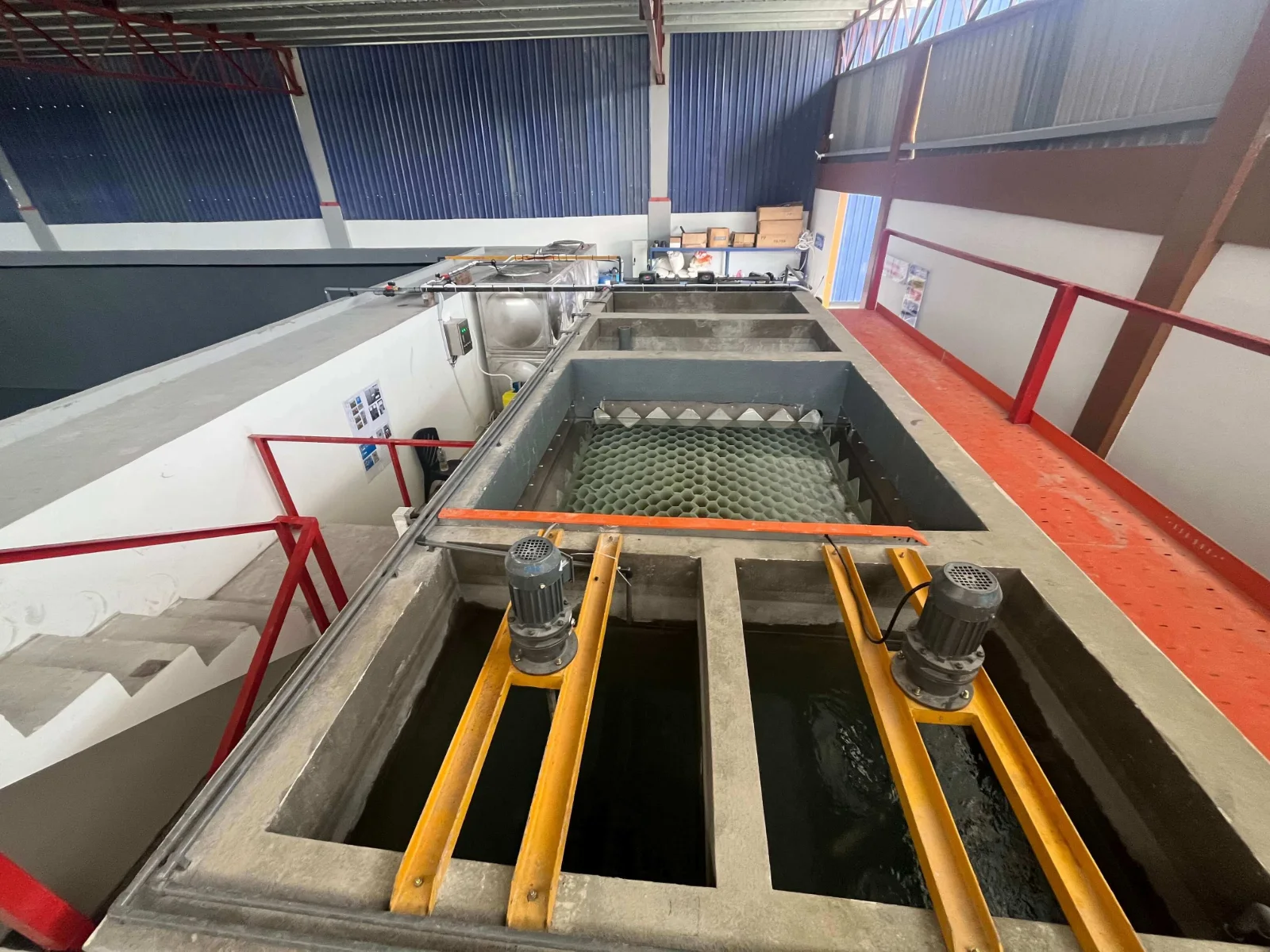
Coagulation and lamella clarification
In the first stage, polyaluminium chloride (PAC) is dosed as a coagulant. Sodium hydroxide is used for pH adjustment and sodium hypochlorite for disinfection.
Polyacrylamide (PAM) is then added to build larger flocs, which settle in a honeycomb lamella clarifier. The company said this stage reduced turbidity on site from above 50 NTU to below 1.0 NTU.
Ultrafiltration ahead of reverse osmosis
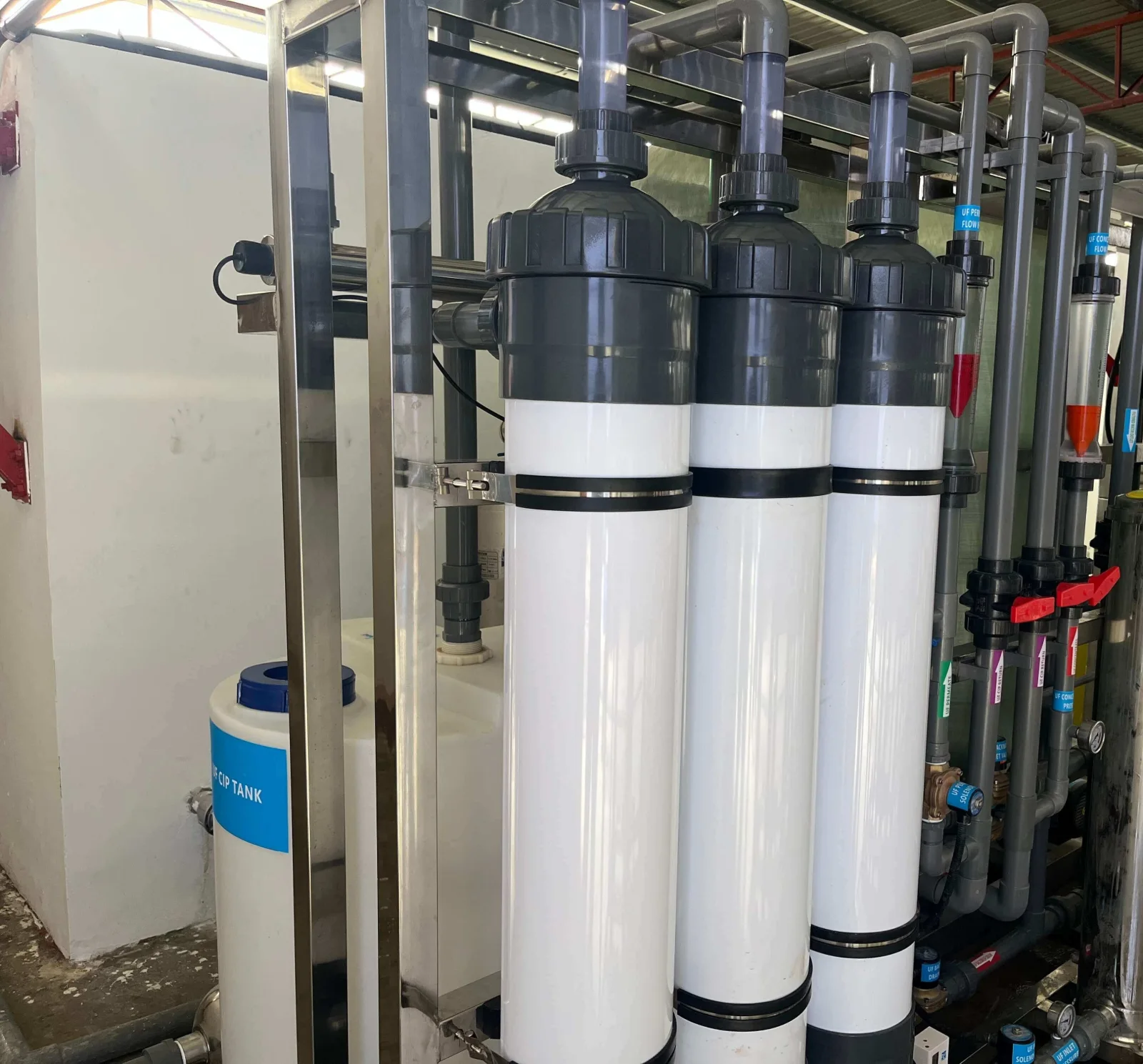
In the second stage, the clarified water passes through a 6 m³ buffer tank to hollow-fibre UF modules with a 0.01 µm pore size. These remove residual suspended solids, colloidal silica and bacteria. They also keep the Silt Density Index (SDI) of the RO feed below 3.0.
The UF permeate is then fed to the RO unit. During commissioning, the RO stage reduced conductivity from 652 µS/cm in the feed (pH 8.0) to 7.29 µS/cm in the permeate (pH 7.0). This is a salt rejection of about 98.9% by conductivity.
GlobalUF stressed that these values were measured on this project’s feed water. They are not general specifications for other sites.
Optimisation and operator training before handover
Before handover, GlobalUF field engineers and Sales Manager Victor Zhang optimised system performance and verified the UF backwash cycles. They also trained the customer’s operating staff on site.
“With borehole water like this, the membranes are only as reliable as the pretreatment in front of them,” said Victor Zhang, Sales Manager at GlobalUF. “Here, coagulation and lamella settling bring turbidity below 1 NTU, and the UF stage keeps the RO feed below SDI 3. The design for any other well still has to start from that site’s own raw-water analysis.”
Borehole water treatment in Southeast Asia
According to the company, many industrial users in Southeast Asia rely on boreholes with high or variable suspended-solids loads. GlobalUF said the Johor plant shows one way to handle such water. Solids are removed by clarification, UF acts as a barrier and salt removal is left to RO.
The company added that the final design for any new site depends on a complete feed-water analysis and the project’s confirmed requirements. GlobalUF has published a technical case description of the Johor groundwater purification project on its website. It includes photographs of the water at each treatment stage.
Frequently asked questions
What has GlobalUF commissioned in Johor, Malaysia?
GlobalUF has completed on-site commissioning and formal handover of a 100 m³/d industrial groundwater purification plant in Johor. The plant combines chemical coagulation and lamella clarification with ultrafiltration and reverse osmosis.
Why does the Johor borehole water need pretreatment before the membranes?
The water comes from a 270 m deep borehole and carries heavy loads of mud, silt and sand, with turbidity consistently above 50 NTU. According to GlobalUF, water like this fouls membranes quickly if fed to them directly, so solids are removed before the membrane stages.
How much did the clarification stage reduce turbidity?
The company said coagulation with PAC and PAM, followed by settling in a honeycomb lamella clarifier, reduced turbidity on site from above 50 NTU to below 1.0 NTU.
What salt rejection did the reverse osmosis stage achieve?
During commissioning, the RO stage reduced conductivity from 652 µS/cm in the feed to 7.29 µS/cm in the permeate, a salt rejection of about 98.9% by conductivity. GlobalUF said these values apply to this project’s feed water and are not general specifications for other sites.
What does the ultrafiltration stage do in the Johor plant?
Hollow-fibre UF modules with a 0.01 µm pore size remove residual suspended solids, colloidal silica and bacteria. They also keep the Silt Density Index of the RO feed below 3.0.