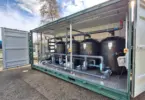



The Hidden Hydro Oscillating Power for Europe (H-HOPE) project has presented the final results of its research into recovering energy from water flows to power monitoring devices. The H-HOPE energy harvesting results were set out at the project’s final event, held on 8 September 2026 as part of the fourth Brussels Hydropower Day, organised by ETIP HYDROPOWER.
The project is coordinated by the University of Padova and funded by the European Union’s Horizon Europe research and innovation programme under Grant Agreement No 101084362. It runs for four years, from November 2022 to October 2026, and its consortium includes 14 partners from nine European countries.
H-HOPE developed and tested energy harvesters for pipes, open streams and open channels. According to the project, the technology targets applications where conventional hydropower equipment may be impractical or uneconomic. It could provide a local power source for sensors monitoring flow, pressure, leaks and water quality.
Researchers present findings at Brussels Hydropower Day
Project coordinator Professor Giovanna Cavazzini of the University of Padova introduced the project’s approach during the technical session “Enhancing Resilience and Digitalisation in Sustainable Hydropower”. The event aimed to connect the research with the needs of utilities, technology providers and policymakers.
Further contributions came from Eduard Doujak of TU Wien, Pavel Rudolf of Brno University of Technology, Urban Lundin of Uppsala University and David Christian Finger of Reykjavik University. Their presentations covered testing across different scales and the wider value of the technology.
How the H-HOPE energy harvesting technology works
The harvesters convert vibrations into electricity. The vibrations are induced by water flowing around an immersed body, such as a cylinder. Tuning the structure to synchronise with vortex shedding amplifies its movement, and piezoelectric or electromagnetic components then extract the energy.
This approach relies on vortex-induced vibrations rather than the rotating turbines used in traditional hydropower.
Results from three harvester configurations
The presentations reported results for three configurations:
- Piping applications: milliwatt-level output from an oscillating cylinder coupled to piezoelectric components, intended for low-power monitoring devices in water networks.
- Open-stream applications: approximately 1–1.5 watts from tests using an electromagnetic generator, with operation across a range of flow velocities.
- Larger open-channel applications: around 50 watts from a hybrid demonstrator tested in Sweden. The demonstrator used active control to adjust energy extraction as operating conditions changed.
The project noted that these outputs reflected different device sizes and test conditions. Performance in practice would depend on the installation, the flow conditions and the energy requirements of the monitoring equipment.
Assessing costs and benefits for water operators
The project’s assessments combined European case studies, life-cycle analysis, flow data and more than 150 stakeholder interviews. H-HOPE has developed a decision framework to help operators examine site-specific costs and benefits. These include maintenance visits, battery replacement, environmental impacts and the value of improved monitoring.
The project said that, depending on the application, locally generated power could reduce reliance on batteries. It could also improve monitoring in remote or difficult-to-access locations. H2O Global News has previously reported on how smart wireless technologies are transforming water sampling and monitoring.
DIY prototypes and next steps towards deployment
Marko Hočevar of the University of Ljubljana showcased H-HOPE’s DIY prototypes at the event. The project describes the prototypes as a way to learn about harvesting energy from water flow using vortex-induced vibrations. The systems are intended to power remote sensors, monitoring equipment and off-grid electronics in rural or urban water networks.
The project said that further development towards deployment will require continued attention to long-term reliability and installation requirements. The business case will also need to be assessed for each individual application.
Frequently asked questions
What is the H-HOPE project?
Hidden Hydro Oscillating Power for Europe (H-HOPE) is a four-year EU Horizon Europe-funded project, running from November 2022 to October 2026. It develops and demonstrates energy harvesting systems for existing water infrastructure and is coordinated by the University of Padova.
How does H-HOPE’s energy harvesting technology work?
It converts vibrations induced by water flowing around an immersed body, such as a cylinder, into electricity. The structure is tuned to synchronise with vortex shedding, and piezoelectric or electromagnetic components extract the energy.
How much power do the H-HOPE energy harvesters produce?
Reported outputs were milliwatt level in piping applications and approximately 1–1.5 watts in open-stream tests. A hybrid demonstrator for larger open channels, tested in Sweden, produced around 50 watts.
What could the energy harvesters be used for?
They are intended to power sensors that monitor flow, pressure, leaks and water quality, particularly where conventional hydropower equipment may be impractical or uneconomic. Depending on the application, they could reduce reliance on batteries in remote or difficult-to-access locations.
Where were the H-HOPE final results presented?
The results were presented at the project’s final event, held as part of the fourth Brussels Hydropower Day on 8 September 2026. The event was organised by ETIP HYDROPOWER.